First Distillation on a Copper Alembic: A Step-by-Step Guide for Beginners
First Distillation on a Copper Alembic: A Step-by-Step Guide for Beginners
Purchasing a traditional Portuguese copper alembic is your entry ticket into a world of ancient traditions, craft mastery, and true flavor alchemy. Unlike sterile, industrial stainless steel stills, a classic copper alembic is alive. It requires an understanding of the craft, proper maintenance, and a passion for the process.
If you are holding your brand-new, gleaming copper still and preparing for your very first run, this step-by-step checklist will ensure your first distillation is safe, seamless, and delivers an authentic, high-quality spirit.
Step 0: The Crucial "Cleaning Run"
Never pour your premium wash, mash, or wine into a brand-new alembic right out of the box. Because these stills are handcrafted and forged by artisans in Portugal, the copper may retain microscopic traces of polishing pastes or manufacturing oils.
- Thoroughly rinse all components with warm water.
- Fill the pot to about 50–60% with regular water, assemble the still, and run a cleaning distillation (also known as a sacrificial run).
- Pro Tip from the Masters: To deeply clean the copper interior, add a small amount of rye flour (about 5% of the water volume) to the pot. The rye flour vapor acts as a natural absorbent, scrubbing the interior walls and preparing the copper for handling delicate spirits.
- Drain the water, let the apparatus cool completely, and rinse it once more. Your alembic is now primed and ready for your first real craft run.
Step 1: Preparing Your Wash and Filling the Pot
For your first actual distillation, it is best to start with a straightforward, alcohol-rich liquid—such as a simple table wine (to make grape brandy) or a high-quality sugar/grain mash.
- The Volume Rule: Never fill your alembic pot to the very top. The golden rule is a maximum fill of 75–80% of the total capacity. The liquid needs ample headspace to boil and form a vapor cushion. Overfilling causes the boiling wash to rise directly into the onion head (a phenomenon known as puking), which will cloud and ruin your final distillate.
Step 2: Assembly and Traditional Sealing
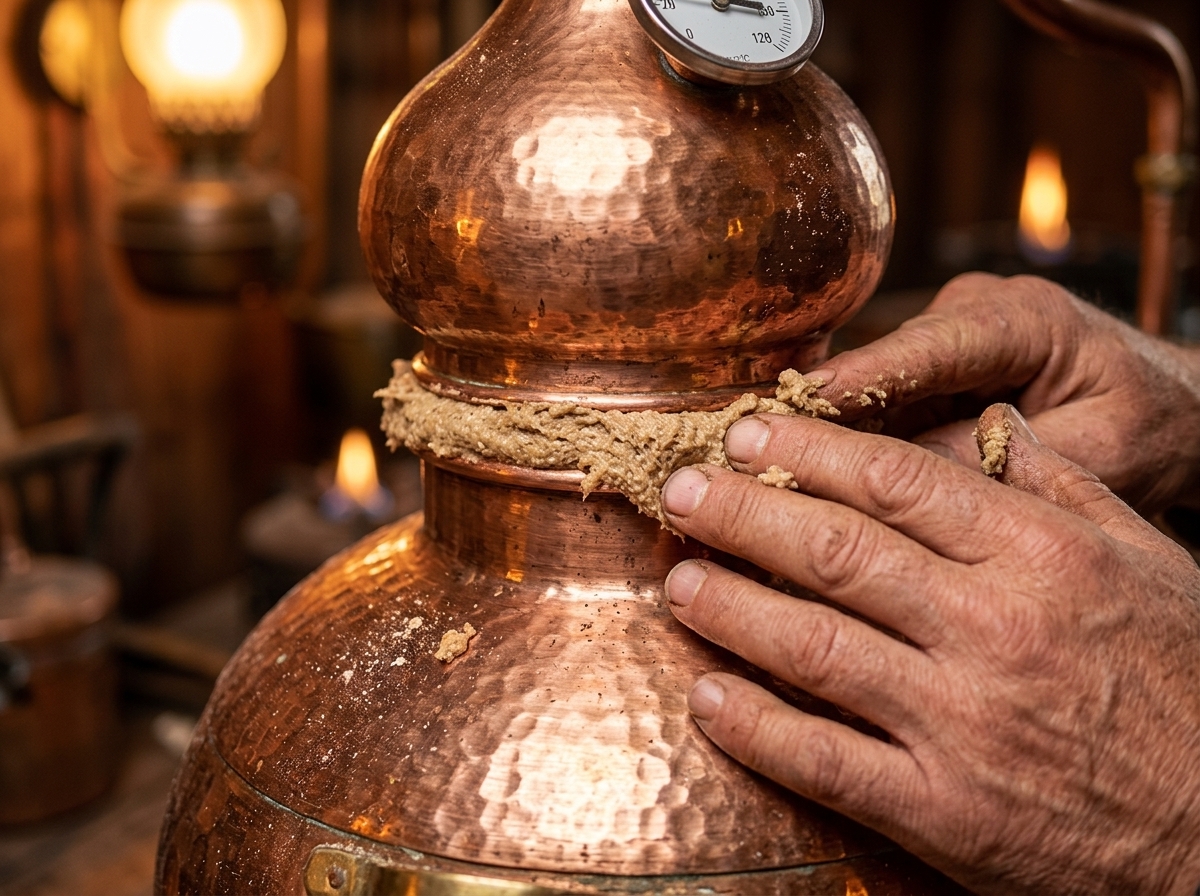
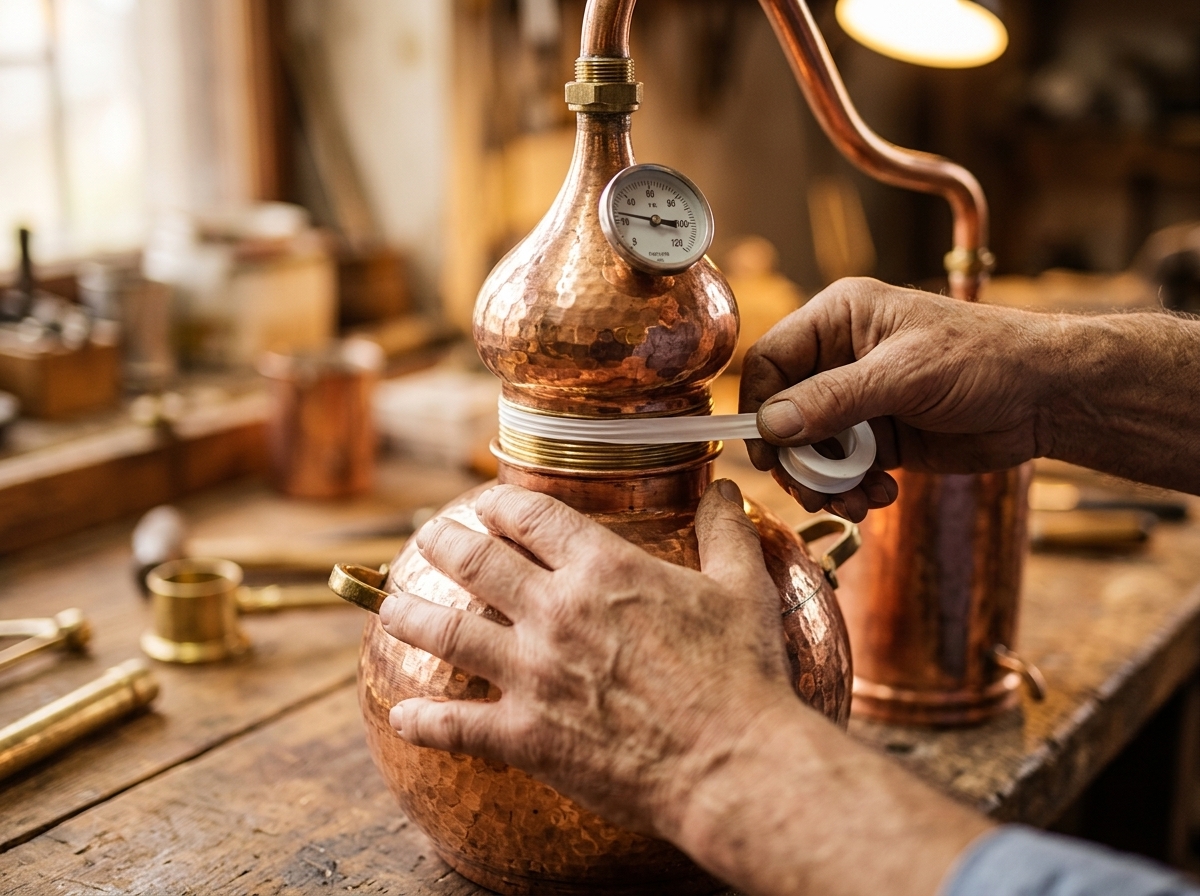
Classic Portuguese alembics feature a traditional slip-joint connection (riveted or soldered seams without rubber gaskets). To prevent precious alcohol vapors from escaping through these joints, they must be sealed.
- Place the onion head (helmet) securely onto the pot.
- Connect the swan neck to both the helmet and the condensing coil inside the cooling bucket.
- The Old-World Method: Mix a small amount of rye flour with cold water until it reaches a thick, pliable, play-dough-like consistency. Carefully paste this dough around all the connecting joints. As the still heats up, the dough will bake hard instantly, creating a perfectly airtight seal. After the run, it cracks off effortlessly without scratching or staining your premium copper.
Step 3: Setting Up the Cooling System
A stable cooling process is critical for capturing high-quality spirits.
- Connect your cold water input hose to the bottom nozzle of the condenser bucket.
- Connect the wastewater discharge hose to the top nozzle.
- Why does this matter? Cold water must fill the condenser from the bottom up, moving counter-current to the hot alcohol vapor traveling down the coil. This ensures optimal heat exchange. Turn on a gentle, steady stream of water as soon as the pot starts warming up.
Step 4: Heating and the Magic of Making "Cuts"
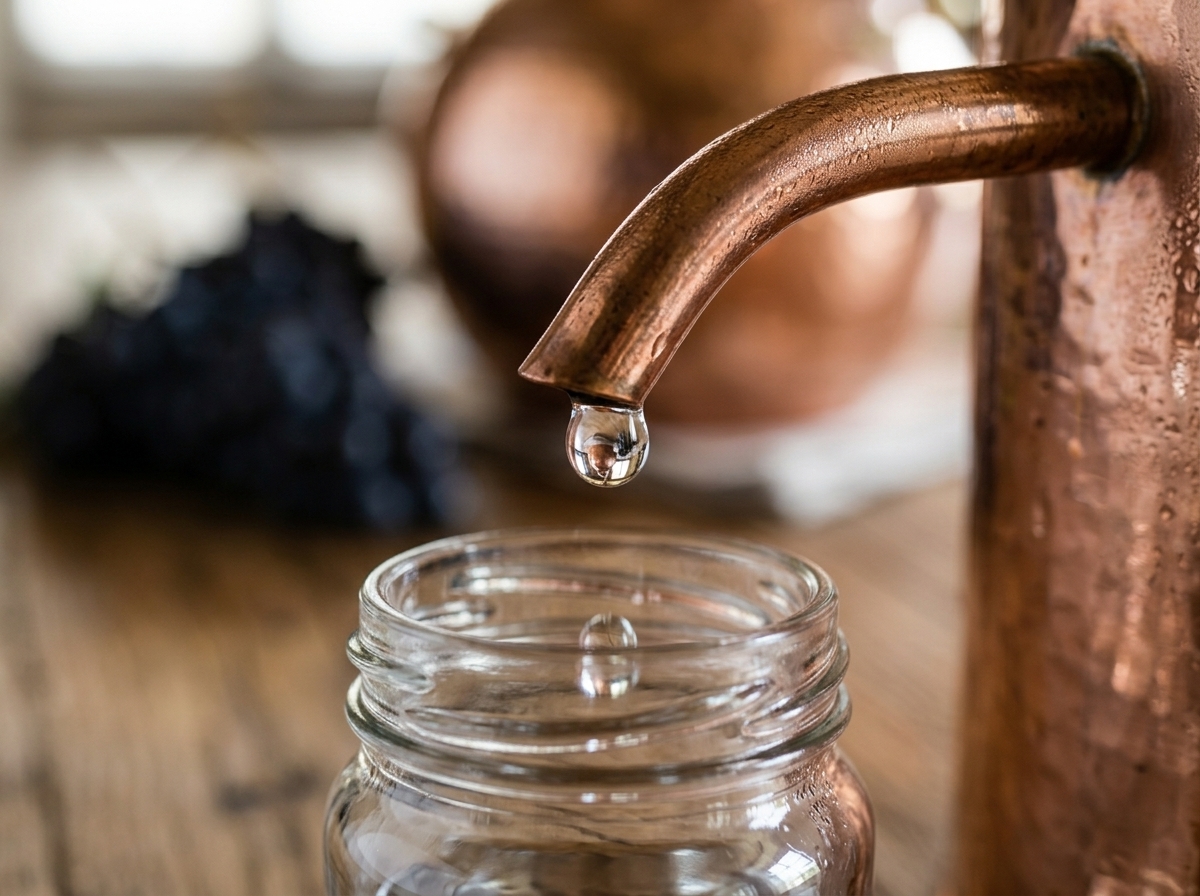
Apply your heat source (gas burner, electric plate, or an induction cooktop with an adapter interface). Start on high heat, but as the thermometer in the helmet approaches 70°C (158°F), reduce the heat by half. The distillate should not gush out in a heavy stream; it should come out in rapid, steady drops or a razor-thin, continuous thread.
Now comes the most critical phase—making the cuts (fractional distillation):
- The Heads (and Foreshots): These are the first 3–5% of the total expected yield (or roughly 50 ml per 10 liters of a 10% ABV wash). This fraction smells sharply of acetone and contains highly volatile compounds like methanol. It is toxic and absolutely undrinkable. Collect this in a separate jar and discard it (or save it for technical cleaning use).
- The Hearts (The Body): This is the sweet spot—the cleanest, most aromatic, and premium part of the run. This is the liquid gold you are looking for. Continue collecting the hearts until the alcohol percentage drops to about 40–45% ABV in the stream, or while your helmet thermometer remains consistently between 78°C and 85°C (172°F – 185°F).
- The Tails: Anything coming out after the stream drops below 40% ABV. This fraction is heavy with fusel oils. It will look cloudy and have an unpleasant, cardboard-like smell, but it still holds a lot of alcohol. Collect the tails separately; you can dump them into your next raw mash batch to boost the overall yield.
Step 5: Shutdown and Proper Maintenance
Once the tails are collected, turn off the heat source and allow the entire system to cool down completely before handling.
- Disassemble the alembic carefully (the leftover backset/stillage inside the pot will be extremely hot).
- Rinse the pot and helmet with warm water.
- The Golden Rule of Copper: Never leave your apparatus dirty. Copper actively binds sulfur compounds during distillation—which is exactly why spirits made in an alembic taste so smooth—but this creates a dark oxide layer inside. Periodically washing the interior with a mild citric acid solution will strip away the oxidation, restoring the copper's original rosy-pink gleam and keeping it ready for your next perfect batch.
Congratulations! Your first authentic craft distillate is born. Let it rest in glass for a few days to smooth out, and prepare to be amazed by the incredible depth of flavor that only a Portuguese copper alembic can deliver.