How to Make Essential Oils At Home: A Guide to Using a Portuguese Column Alembic Still
How to Make Essential Oils At Home: A Guide to Using a Portuguese Column Alembic Still
Have you ever wondered what real, pure lavender, Provencal mint, or fresh pine needles smell like without a single drop of synthetic chemicals? The secret was unlocked centuries ago, and its name is the Portuguese copper alembic still.
While a classic alembic is traditionally associated with distilling spirits, a column alembic still is the ultimate holy grail for crafting organic essential oils and hydrosols (floral water). Today, we’ll guide you step-by-step on how to turn a handful of botanicals into liquid gold right in your own kitchen.
Why Choose a Column Alembic Still for Essential Oils?
To extract high-quality essential oils, the steam distillation method is used. Boiling herbs directly in water (as done in traditional stills) can "cook" delicate petals and ruin the subtle nuances of the aroma.
A column still solves this problem perfectly through:
-
Separation of Mediums: Water boils in the bottom pot (boiler), while the plant material rests safely above in the column.
-
Gentle Steam Extraction: Hot steam passes upward through the plants, delicately carrying away the most volatile compounds and essential oil molecules without burning them.
-
The Power of Copper: Copper possesses excellent thermal conductivity and, most importantly, naturally binds sulfur compounds. This purifies the aroma, making your DIY essential oils flawless.
Step-by-Step Guide to Essential Oil Distillation: From Flower to Bottle
Step 1: Preparing Botanicals and Water
You can use both fresh and dried plants for DIY distillation (lavender, rosemary, sage, mint, citrus peels, or pine needles).
-
Water: Use clean, filtered, or spring water. Fill the boiler to about 2/3 of its capacity.
-
Plants: Pack the plant material tightly into the column, but don't overdo it—the steam must be able to pass through freely. The denser the pack, the more concentrated your final yield will be.
Step 2: Assembling the Alembic Still
-
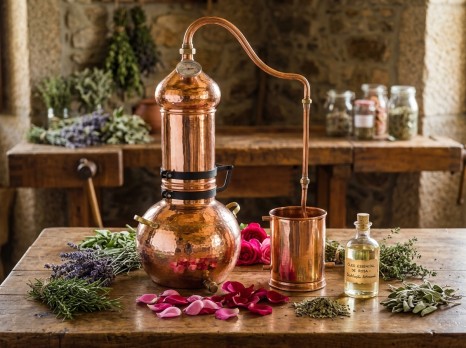
Place the column onto the boiler pot.
-
Seal the top of the column with the onion helmet and connect the "swan neck" pipe to the condenser (cooling bucket).
-
Check all joints for leaks. Following old Portuguese tradition, you can seal the connections with PTFE tape or a simple paste made of flour and water.
-
Connect the cold water supply to the lower inlet of the condenser and the warm water drain to the upper outlet.
Step 3: The Distillation Process
Turn on the heat source. Once the water boils, steam will rise into the column, pass through the herbs, become saturated with oils, and head into the condenser. There, the steam condenses, and a precious stream of distillate will begin to flow into your collection vessel.
Pro Tip: Always monitor the cooling water. It must remain cold to maximize the yield and quality of your essential oil.
Step 4: Separation (The Magic of the Florentine Flask)
The liquid coming out will look slightly cloudy. Don't worry—this is a natural mixture of two premium products:
-
Hydrosol (Floral Water): This makes up the majority of the volume. It is an amazing natural facial toner and a perfect base for homemade cosmetics.
-
Essential Oil: A thin, oily layer floating on the surface (or sinking to the bottom if you are distilling heavier oils like clove).
To separate the oil from the water, use a separatory funnel or a Florentine flask. Drain the hydrosol from the bottom and collect the pure essential oil into a separate dark glass bottle.
Realistic Essential Oil Yields: How Much Will You Get?
Let’s look at the numbers realistically: extracting pure essential oil is a low-yield, labor-intensive process.
-
From 1 kg of lavender, you will get about 10–20 ml of pure oil.
-
From 1 kg of rosemary, you will get about 10–15 ml.
-
Citrus peels usually offer a slightly higher yield.
However, you are guaranteed to get several liters of pure, organic hydrosol, which is quite expensive in stores. Plus, those few drops of your own homemade essential oil will far surpass any drugstore alternative in quality and purity.
3 Golden Rules for Beginner Essential Oil Distillers
-
Sterility is Key: Your copper still must be spotlessly clean before you begin. Residue from previous runs will instantly ruin a new batch's aroma.
-
Use Dark Glass: Store your finished oils in amber or cobalt glass bottles in a cool, dark place. Sunlight is the ultimate enemy of essential oils.
-
Let it Mature: Freshly distilled oil needs to "rest" for a couple of weeks in a dark cupboard. This allows its aroma components to fully round out and blend together.
Ready to Start Your Aromatherapy Journey?
Want to turn your home into a boutique perfumery lab? Our catalog features authentic, handcrafted Portuguese column alembic stills. Choose your ideal size today and start crafting pure, natural beauty this week!