
The True Taste of Portugal: Traditional Aguardente Recipe Using a Copper Alembic

Posted on17 Minutes ago 20
Like0

The True Taste of Portugal: Traditional Aguardente Recipe Using a Copper Alembic  Autumn is the season of harvest and winemaking. But what should you do with the leftover grape pomace after pressing? In Italy, they make grappa; in Georgia, it's chacha; and in Portugal, it's the famous Aguardente (Aguardente bagaceira). This is a strong, incredibly aromatic spirit that captures the very soul of the grapevine.  Today, we will show you how to make authentic Portuguese homemade brandy using a traditional copper alembic. It is the copper that makes this drink so smooth, eliminating harsh odors and preserving its rich fruity essence. What You Will Need  You don't need to be a master distiller to create high-quality Aguardente. The key is good raw materials and the right equipment.  Ingredients:      Grape pomace (skins and seeds): 10 kg (preferably fresh, not over-dried).      Water: 10–15 liters (pure, spring, or filtered water).      Sugar: 2–3 kg (depending on the natural sweetness of your grapes).      Wine yeast: as per package instructions (wild yeast on the pomace works too, but cultured yeast is more reliable).  Equipment:      Fermentation vessel with an airlock.      Portuguese copper alembic still (a classic 10-20 liter model is ideal).      Alcoholmeter (hydrometer).      Copper sieve or false bottom for the alembic (to prevent the pomace from burning at the bottom).  Step-by-Step Aguardente Recipe Step 1: Preparing the Mash (Fermentation)      Place the grape pomace into the fermentation vessel.      Dissolve the sugar in warm water (no higher than 30°C) and pour it over the pomace. The water should cover the mass by a few centimeters.      Add the wine yeast, install the airlock, and leave the vessel in a dark, warm place (20-25°C).      Important: For the first few days, regularly stir the pomace "cap" to prevent it from turning sour. Fermentation usually takes 10 to 20 days. When the airlock stops bubbling and the mash becomes slightly bitter and clear, it is ready for distillation.  Step 2: First Distillation (Stripping Run)  The secret to proper pomace brandy is distilling it together with the skins, as that's where all the aroma hides.      Place the copper sieve (false bottom) inside your Portuguese alembic.      Pour the fermented mash along with the pomace into the pot (do not fill more than 75-80% of its volume).      Assemble the alembic, seal the joints (the Portuguese traditionally use rye dough for this), and apply heat.      Distill at maximum power until the alcohol by volume (ABV) in the stream drops to 5-10%. The resulting liquid is called "low wines." At this stage, we do not make any cuts.  Step 3: Second Distillation (Spirit Run & Cuts)  This is the most crucial step, where the clean taste and safety of the spirit are established.      Dilute the low wines with clean water to an ABV of 20-25%.      Thoroughly clean the alembic from any leftover pomace and pour the diluted spirit back into the pot.      Collecting the "Heads": Heat slowly. Collect the first 10% of the expected absolute alcohol yield (or about 50 ml per liter of low wines) in a separate container and discard it. This is a technical fraction with a harsh acetone smell.      Collecting the "Hearts" (The Body): Once a pleasant fruity aroma appears, start collecting the drinkable portion. Continue collecting until the ABV in the stream drops to 45-50%.      Collecting the "Tails": The remaining cloudy liquid with a fusel smell can be collected separately and added to your next batch of mash.  Why Choose a Copper Alembic?  You might wonder, why not just use a standard stainless steel still?  The secret lies in the chemistry of the process. Grape pomace contains many sulfur compounds, which release unpleasant odors when heated. Copper acts as a catalyst: it binds with sulfur dioxide, purifying the distillate. Furthermore, copper heats up quickly and distributes heat evenly, preventing the thick fruity mash from burning. As a result, you get that smooth, well-rounded taste of Portuguese Aguardente that is simply impossible to replicate with stainless steel equipment. The Final Touch  Finished Aguardente needs to "rest." Dilute it with spring water to a comfortable drinking strength (usually 40-45%), bottle it in glass, and leave it in a dark place for 2-3 weeks. During this time, the flavor will stabilize and become incredibly smooth. And if you age it in an oak barrel for six months, you will get a premium spirit that rivals top-tier cognac!  Ready to create your first distillation masterpiece? Our catalog features authentic, handcrafted Portuguese copper alembics, perfectly suited for making fruit distillates and brandies. Choose your model today and touch the centuries-old traditions of distillation!
The True Taste of Portugal: Traditional Aguardente Recipe Using a Copper Alembic
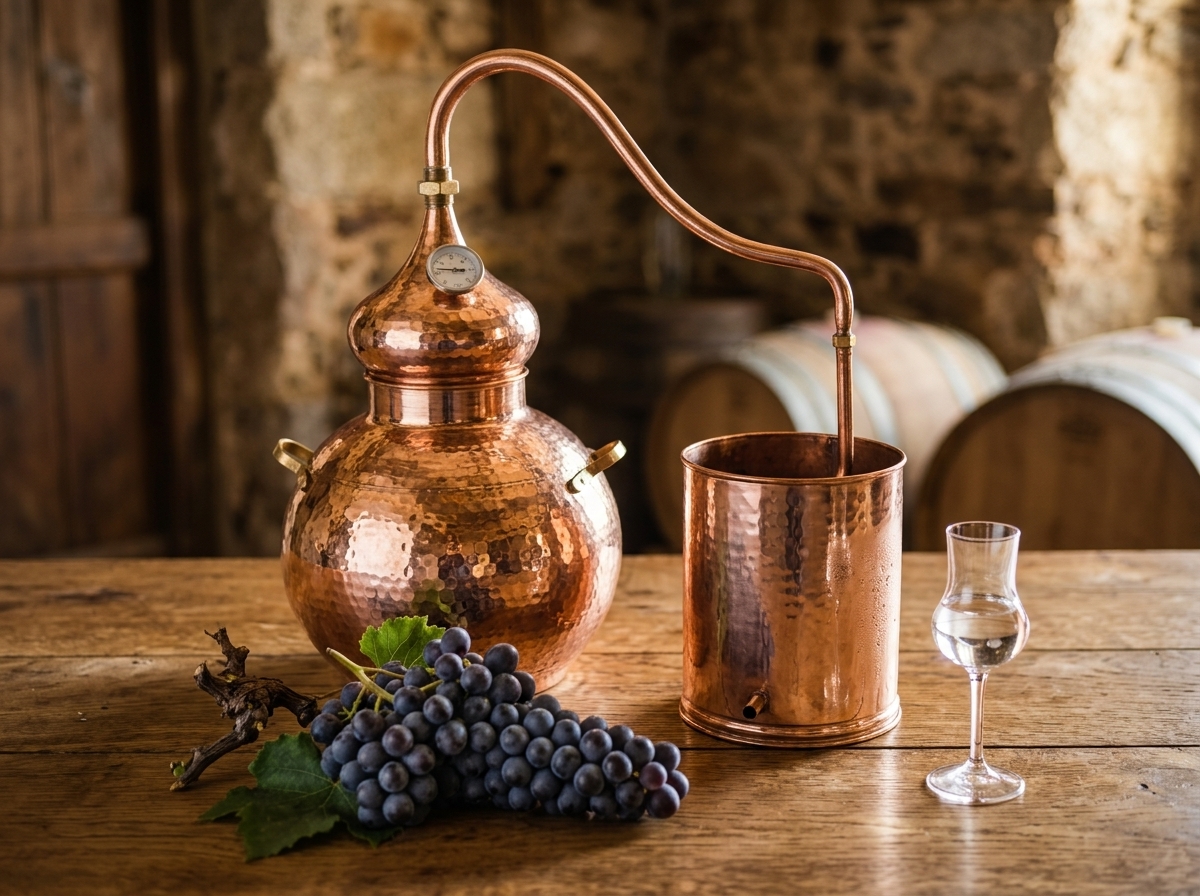
Autumn is the season of harvest and winemaking. But what should you do with the leftover grape pomace after pressing? In Italy, they make grappa; in Georgia, it's chacha; and in Portugal, it's the famous Aguardente (Aguardente bagaceira). This is a strong, incredibly aromatic spirit that captures the very soul of the grapevine.

Today, we will show you how to make authentic Portuguese homemade brandy using a traditional copper alembic. It is the copper that makes this drink so smooth, eliminating harsh odors and preserving its rich fruity essence.

What You Will Need

You don't need to be a master distiller to create high-quality Aguardente. The key is good raw materials and the right equipment.

Ingredients:

  • Grape pomace (skins and seeds): 10 kg (preferably fresh, not over-dried).

  • Water: 10–15 liters (pure, spring, or filtered water).

  • Sugar: 2–3 kg (depending on the natural sweetness of your grapes).

  • Wine yeast: as per package instructions (wild yeast on the pomace works too, but cultured yeast is more reliable).

Equipment:

  • Fermentation vessel with an airlock.

  • Portuguese copper alembic still (a classic 10-20 liter model is ideal).

  • Alcoholmeter (hydrometer).

  • Copper sieve or false bottom for the alembic (to prevent the pomace from burning at the bottom).

Step-by-Step Aguardente Recipe

Step 1: Preparing the Mash (Fermentation)

  1. Place the grape pomace into the fermentation vessel.

  2. Dissolve the sugar in warm water (no higher than 30°C) and pour it over the pomace. The water should cover the mass by a few centimeters.

  3. Add the wine yeast, install the airlock, and leave the vessel in a dark, warm place (20-25°C).

  4. Important: For the first few days, regularly stir the pomace "cap" to prevent it from turning sour. Fermentation usually takes 10 to 20 days. When the airlock stops bubbling and the mash becomes slightly bitter and clear, it is ready for distillation.
 

Step 2: First Distillation (Stripping Run)

The secret to proper pomace brandy is distilling it together with the skins, as that's where all the aroma hides.

  • Place the copper sieve (false bottom) inside your Portuguese alembic.

  • Pour the fermented mash along with the pomace into the pot (do not fill more than 75-80% of its volume).

  • Assemble the alembic, seal the joints (the Portuguese traditionally use rye dough for this), and apply heat.

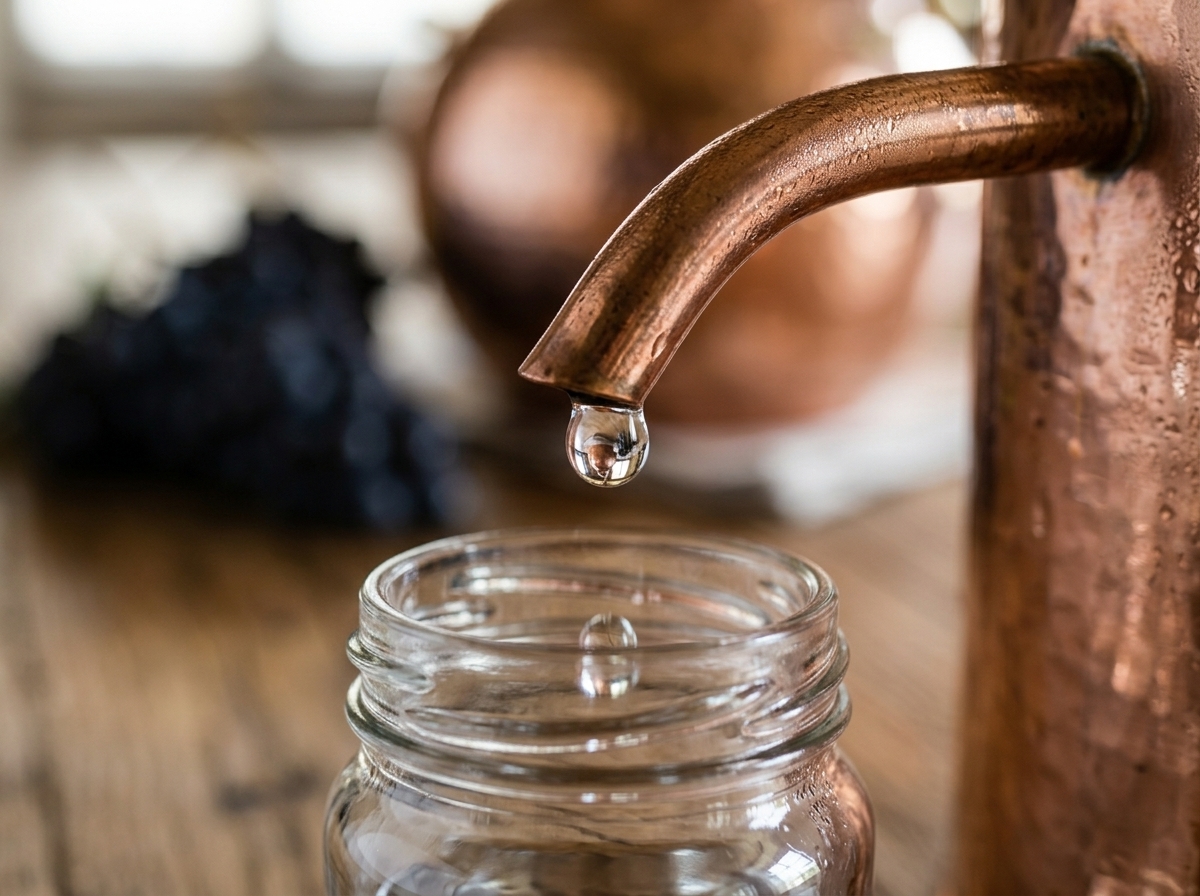
  • Distill at maximum power until the alcohol by volume (ABV) in the stream drops to 5-10%. The resulting liquid is called "low wines." At this stage, we do not make any cuts.

Step 3: Second Distillation (Spirit Run & Cuts)

This is the most crucial step, where the clean taste and safety of the spirit are established.

  • Dilute the low wines with clean water to an ABV of 20-25%.

  • Thoroughly clean the alembic from any leftover pomace and pour the diluted spirit back into the pot.

  • Collecting the "Heads": Heat slowly. Collect the first 10% of the expected absolute alcohol yield (or about 50 ml per liter of low wines) in a separate container and discard it. This is a technical fraction with a harsh acetone smell.

  • Collecting the "Hearts" (The Body): Once a pleasant fruity aroma appears, start collecting the drinkable portion. Continue collecting until the ABV in the stream drops to 45-50%.

  • Collecting the "Tails": The remaining cloudy liquid with a fusel smell can be collected separately and added to your next batch of mash.

Aguardente Recipe Using a Copper Alembic

Why Choose a Copper Alembic?

You might wonder, why not just use a standard stainless steel still?

The secret lies in the chemistry of the process. Grape pomace contains many sulfur compounds, which release unpleasant odors when heated. Copper acts as a catalyst: it binds with sulfur dioxide, purifying the distillate. Furthermore, copper heats up quickly and distributes heat evenly, preventing the thick fruity mash from burning. As a result, you get that smooth, well-rounded taste of Portuguese Aguardente that is simply impossible to replicate with stainless steel equipment.

The Final Touch

Finished Aguardente needs to "rest." Dilute it with spring water to a comfortable drinking strength (usually 40-45%), bottle it in glass, and leave it in a dark place for 2-3 weeks. During this time, the flavor will stabilize and become incredibly smooth. And if you age it in an oak barrel for six months, you will get a premium spirit that rivals top-tier cognac!

Ready to create your first distillation masterpiece? Our catalog features authentic, handcrafted Portuguese copper alembics, perfectly suited for making fruit distillates and brandies. Choose your model today and touch the centuries-old traditions of distillation!

Leave a Comment
Leave a Reply
Please login to post a comment.

Menu

Share

QR code

Settings

Create a free account to save loved items.

Sign in

Create a free account to use wishlists.

Sign in